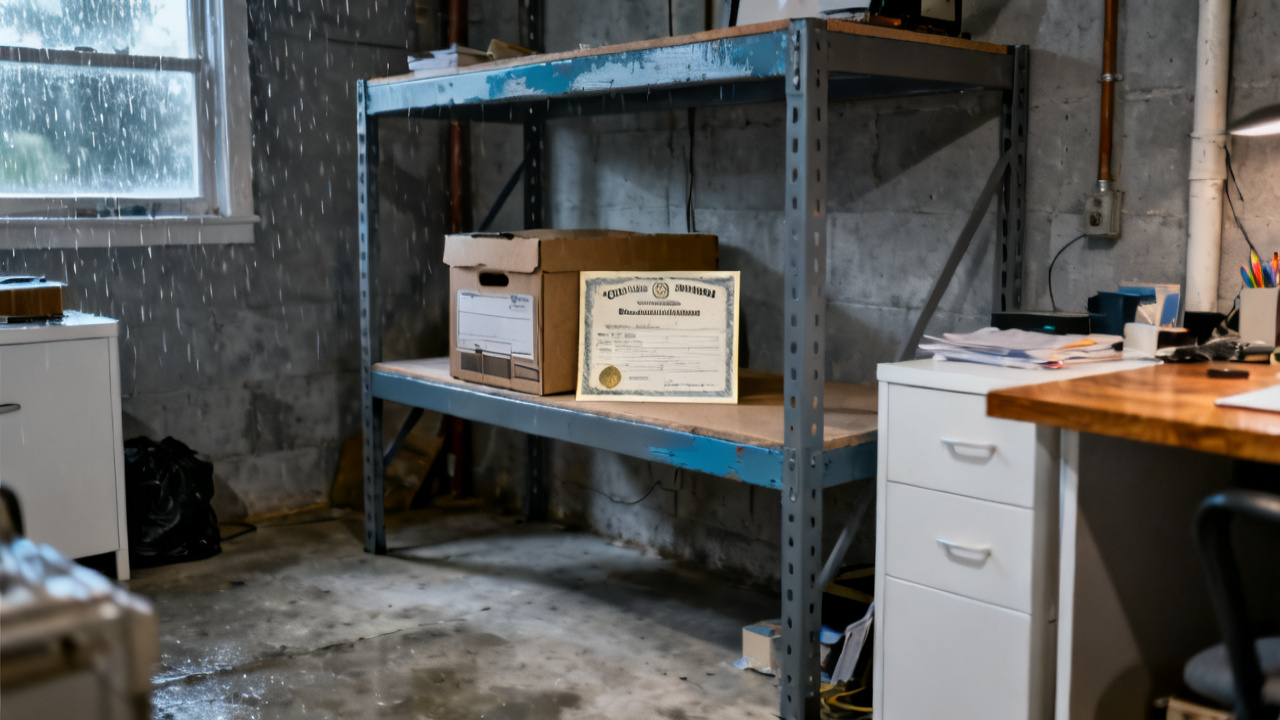
Educational overview only. Prudent Guardian (inspirecodingedu.com) is not an insurance company, broker, law firm, or registered investment adviser, and does not provide personalized insurance, investment, tax, medical, or legal advice. Verify details with licensed professionals and official issuers.
This checklist documents all necessary steps to verify, submit, and store a certified death certificate as part of a complete formal claim file. A certified death certificate differs from an uncertified informational copy in that it carries a raised official seal from the vital records office of the state or county where the death occurred, and it is required for most life insurance, estate, pension, and burial reimbursement claims. Prudent Guardian has developed this process to help you avoid common submission delays that result from missing fields, invalid copies, or missed processing windows. This page is for educational purposes only; it cannot bind coverage, alter claim outcomes, or serve as legal advice. Always confirm requirements directly with your claim handler, county vital records clerk, or licensed estate professional before submitting official documentation.
Claim folder required fields for death certificate inclusion
All certified death certificates submitted with a claim file must meet mandatory field requirements to avoid rejection. The table below acts as your official death-certificate copy checklist to verify compliance before submission:

| Field Name | Required for Claim Submission | Common Rejection Reason | Verification Check |
|---|---|---|---|
| Official raised state/county seal | Yes | Submitted copy is an uncertified informational printout with no embossed seal | Run a finger over the paper to confirm a raised, textured seal prior to scanning or mailing |
| Decedent full legal name (matches policy/account holder name) | Yes | Name includes a nickname, misspelling, or former married name not on file with the carrier | Cross-reference with the policy declaration page or official account holder ID to confirm exact spelling |
| Decedent date of birth | Yes | Date of birth does not match Social Security or account records | Align with the date of birth listed on the decedent’s government-issued ID or tax records on file |
| Full date of death | Yes | Date of death is redacted, illegible, or partially covered by a clerk stamp | Ensure no portion of the month, day, or year of death is obscured by official markings |
| Manner of death (if applicable) | Yes, for accidental death, workers’ compensation, or critical illness claims | Manner of death is redacted per state privacy rules for claim types that require disclosure | Confirm with your claim handler if you need to request an unredacted copy for your specific claim type |
| Vital records office state registration number | Yes | 8-10 digit registration number is missing or blurred | Verify the number is printed clearly in the bottom margin of the certificate |
| Issuing clerk handwritten signature | Yes | Signature is a pre-printed stamp instead of an original ink signature | Confirm the signature is handwritten, as stamped signatures are not accepted for certified legal copies |
If any required field is missing or mismatched, request a corrected certified copy from the county vital records office before submitting to your claim carrier. Uncertified copies, even if high-resolution scans, will be rejected for all formal claim filings, as they do not carry the legal weight required to process beneficiary disbursements or estate transfers. Most carriers require you to submit either the original physical certified copy or a high-resolution scan of the original, including clear imagery of the raised seal.
Request form validation steps for death certificate submissions
When requesting certified copies from a vital records office, follow these steps to ensure you receive valid, claim-ready copies with minimal delays. First, explicitly note on your request form that the copies are for “insurance and estate claim submission” — some jurisdictions issue lower-tier certified copies for personal use that do not include required fields like the clerk’s handwritten signature or unredacted manner of death. Next, fill out all required request fields, including your official relationship to the decedent, any assigned claim file numbers, and your current contact information for follow-up.
Confirm the jurisdiction’s proof of identity requirements before submitting your request: most require a copy of your government-issued photo ID and proof of beneficiary status, such as a copy of the policy declaration page naming you as a recipient, to release a certified copy. If you are paying for expedited processing, confirm the processing timeline in writing before paying any rush fees — illustrative example: some rural counties take 3 business days for expedited copies, while larger metro jurisdictions may take 7 business days even for rush requests. Before leaving the vital records office (or before opening a mailed certified copy), inspect every field against the checklist above to catch errors immediately, as correction requests can take 10+ business days to process if submitted after you leave the office. Most claim bundles require 4 to 6 certified copies, so request enough to cover all active claims, estate filings, and long-term storage needs.
Submission calendar alignment for certified copy processing deadlines
Start by mapping all claim submission deadlines for your active claims first: most life insurance claims require submission within 90 days of the date of death, while pension and burial reimbursement claims may have shorter 30 or 60 day windows. Add a 15-day buffer to your internal deadline for submitting the death certificate to account for processing delays from the vital records office, shipping times, and any correction requests.
If you are submitting digital copies, confirm the carrier’s file format requirements: most accept PDF scans under 10MB, with all edges of the certificate visible, including the seal and signature fields. If you are submitting physical copies, send them via trackable mail with signature confirmation, and add 3 business days to your shipping timeline to account for carrier delays. Illustrative example: if your life insurance claim deadline is 90 days from the date of death, set a target to submit the certified death certificate no later than day 70, to leave 20 days for re-submission if your first copy is rejected for missing fields. Note that most vital records offices are closed on state and federal holidays, so factor those dates into your processing timeline when requesting copies. If you are at risk of missing a claim deadline, contact your claim handler immediately to request a formal extension in writing, rather than submitting an invalid uncertified copy to meet the initial deadline.
Acknowledgment letter matching process for claim file cross-referencing
When you submit the death certificate, the carrier will send an acknowledgment letter (either digital or physical) within 3-5 business days of receipt. First, confirm that the acknowledgment letter lists the correct claim file number, decedent name, and date of receipt for the death certificate. Next, cross-reference the document ID number listed on the acknowledgment letter with the state registration number on your certified death certificate to ensure the carrier matched the correct document to your claim file.
If the acknowledgment letter notes that the death certificate is missing required fields, cross-reference the listed missing fields with your copy of the certificate, and follow up with either the vital records office (for errors on the certificate) or the claim handler (for scanning or processing errors on their end) within 7 business days of receiving the acknowledgment. Store a copy of the acknowledgment letter in your claim folder directly behind your copy of the certified death certificate, so you can prove submission if the carrier reports missing documentation later. If you do not receive an acknowledgment letter within 7 business days of submission, follow up with your claim handler to confirm receipt, rather than waiting for a rejection notice that may arrive close to your submission deadline. If you are submitting certificates to multiple carriers, keep separate acknowledgment letters for each claim file, and label each one with the carrier name and policy number to avoid cross-file confusion.
Archival box labeling requirements for long-term death certificate storage
After all claims are processed, store remaining certified copies and related documents securely for future reference. Use a weatherproof, fire-resistant archival box rated for long-term paper storage, to avoid damage from water, heat, or pests. Label the outside of the box with the decedent’s full legal name, date of death, and the date all related claims were finalized. Inside the box, store the original certified death copies in a sealed acid-free paper envelope, to prevent ink fading over time.
Include a copy of all claim acknowledgment letters, disbursement receipts, and estate filing documents in the same folder as the death certificate, so you have a complete paper trail if any future claims or disputes arise. Label the envelope with the number of original certified copies stored inside, the issuing vital records office name, and the contact information for the county clerk if you need to request additional copies in the future. Illustrative example: if you have 2 remaining original certified copies after processing all claims, note that on the envelope label, so you do not accidentally use an original copy for informal requests that accept uncertified copies. Keep the archival box in a secure, temperature-controlled location, such as a home safe or locked filing cabinet, and share the location of the box with any other authorized estate beneficiaries or executors. Prudent Guardian recommends that you keep these records for a minimum of 7 years after all claims are finalized, or for the duration of any active estate trusts, as required by state law.
Your immediate next step is to pull your active claim file policy documents, note all submission deadlines, and request at least 4 certified death certificates from the relevant county vital records office if you have not already done so.
Written by the Prudent Guardian editors.