Educational overview only. Prudent Guardian (inspirecodingedu.com) is not an insurance company, broker, law firm, or registered investment adviser, and does not provide personalized insurance, investment, tax, medical, or legal advice. Verify details with licensed professionals and official issuers.
Distinguishing between an SSDI award letter and a commercial intake packet ensures household disability records and service request documentation are filed and processed correctly. Misfiling these documents can lead to delayed Social Security Disability Insurance (SSDI) benefit payments, missed deadlines for private service enrollment, or accidental submission of sensitive personal information to the wrong entity. This educational resource outlines clear, actionable steps to identify, separate, and store these two distinct document types to streamline household records management. Prudent Guardian notes that this guidance is for organizational purposes only, and you should always contact the issuing agency or provider directly if you have questions about document content, eligibility, or required actions; this page cannot bind coverage, a claim result, or a lawsuit.
SSDI award letter core identifying markers
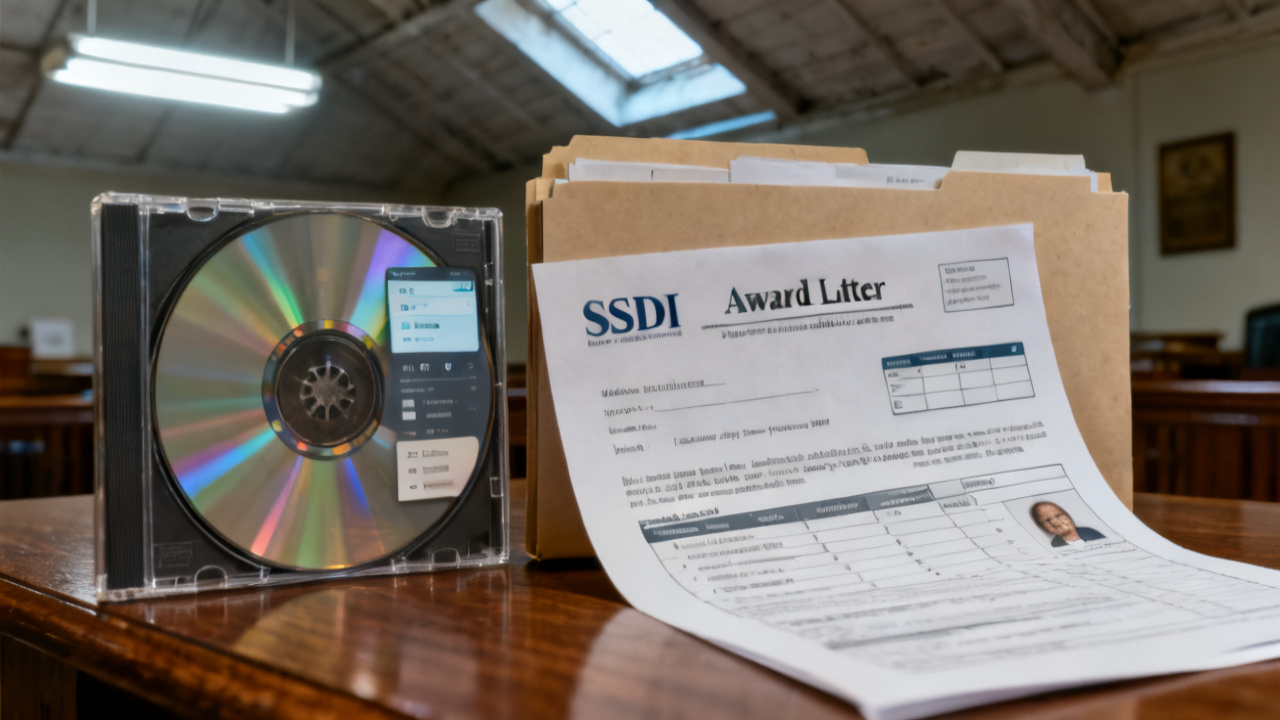
SSDI award letters are official correspondence from the U.S. Social Security Administration that confirm a disability claim has been approved, and outline the exact terms of benefit disbursement. All official award letters carry unique markers that set them apart from private third-party mail, including a printed or embossed SSA eagle seal, a claim number that matches your Social Security Number (SSN) with a 1 to 2 letter suffix indicating your claimant status, and no requests for upfront payment or sensitive financial information beyond pre-submitted banking details for direct deposit. These letters will also include explicit information about your disability onset date, the amount of your monthly benefit, the date of your first scheduled payment, and a 60-day appeal deadline if you disagree with the benefit amount or eligibility determination.
Commercial intake packet mandatory cover sheet details
Commercial intake packets are sent by private third-party entities that provide services related to your disability, including private long-term disability insurance carriers, home health care agencies, vocational rehabilitation providers, and assistive equipment vendors. All legitimate commercial intake packets will have a standardized cover sheet that includes mandatory details to confirm their origin and purpose: the full legal name and tax ID of the sending company, a unique client ID number that is not your full SSN (most providers only list the last 4 digits of your SSN for identity verification), a clear checklist of required actions or supporting documents you must submit to complete enrollment, a disclosure of any cost-sharing obligations such as copays or deductibles, and contact information for the company’s dedicated customer service team for intake-related questions. Unlike SSDI award letters, these packets will never include a government seal, and will explicitly state that they are not correspondence from a federal or state agency.
Use the following side-by-side comparison table to quickly identify which document type you have received:
| Document Feature | SSDI Award Letter | Commercial Intake Packet |
|---|---|---|
| Issuing Entity | Exclusively U.S. Social Security Administration (SSA) | Private third-party (home health agency, private disability insurer, vocational rehab provider, etc.) |
| Official ID Number | 9-digit SSN with 1-2 letter suffix (e.g. 123-45-6789A for primary claimant) | Unique client ID not tied to full SSN (or only last 4 digits of SSN listed) |
| Core Content | Monthly benefit amount, disability onset date, first payment date, appeal deadline for benefit disputes | Request for signed consent for services, required supporting document checklist, cost sharing disclosure, service eligibility criteria |
| Official Seal | Embossed or printed SSA eagle seal in header/footer | Company logo, no government seal |
| Contact Information | Only SSA 1-800-772-1213 or local SSA field office phone/address | Private company customer service line, physical office address, secure portal URL |
| Payment Request | Never requests upfront payment, credit card, or bank account information via mailed letter | May include copay, deductible, or service fee disclosure, and payment submission instructions |
Mailed form barcode matching steps for verification
Verifying the legitimacy of both document types via their printed barcodes reduces the risk of responding to scam mail that attempts to steal your personal information or benefits. Follow these steps to match barcodes for each document type:
- Locate the linear or 2D barcode printed in the top right corner of the first page of the document, along with the associated numerical barcode ID listed directly below the image.
- For SSDI award letters: Log into your official mySocialSecurity account via the SSA’s secure government website (ssa.gov/myaccount), navigate to the “Verify Mailed Correspondence” tool in the document center, and enter the 12-digit barcode ID to confirm the letter was issued by the SSA. Illustrative example: A valid SSA award letter barcode ID will follow the format 123456789012, with no letters or special characters.
- For commercial intake packets: Navigate directly to the service provider’s official secure website (do not click links included in the mailed packet to avoid phishing risks), locate the intake verification tool on their customer portal, and enter the 8 to 16 digit barcode ID to confirm the packet was sent by the provider. If the ID does not match any open request in their system, contact the provider using a phone number listed on their official website, not the number printed on the suspicious packet.
- Save a screenshot of the barcode verification confirmation for your records, and attach it to the inside of the corresponding document folder for future reference.
Paper folder labeling rules for separating both documents
Clear, consistent folder labeling prevents accidental mixing of government benefits records and private service paperwork, which reduces the risk of submitting the wrong document to an entity that does not need it. Follow these mandatory labeling rules for all physical folders:
- Use a fixed color coding system to distinguish document types at a glance: Reserve navy blue folders exclusively for SSA and government disability records, and bright green folders exclusively for commercial intake packets and related private service documentation.
- Print the following details in large, legible font on the front tab of each folder: For SSDI award letters, list “SSDI Award Letter”, the date the letter was issued, and the last 4 digits of your SSN plus your claimant suffix (e.g. “SSDI Award Letter, 02/12/2024, 6789A”). For commercial intake packets, list the full name of the service provider, the date you received the packet, and the last 4 digits of your assigned client ID (e.g. “Maplewood Home Health Intake Packet, 02/18/2024, 1234”).
- Add a color-coded sticky note to the inside front cover of each folder noting any time-sensitive actions required for the document: For an SSDI award letter, this may include “Confirm first direct deposit posts to checking account 03/03/2024”; for a commercial intake packet, this may include “Submit signed consent form and 2023 medical records by 03/04/2024”.
- Never store both document types in the same folder, even if they relate to the same disability claim, to avoid cross-contamination of records and accidental disclosure of sensitive government benefit information to private entities.
Locked storage box categorization tips for long-term filing
Long-term storage of these documents in a secure, organized location ensures you can access them quickly for benefit renewals, service requests, or eligibility verifications. Follow these tips for categorizing documents in a locked, fireproof household storage box:
- Dedicate one full locked storage box exclusively to disability-related paperwork, separate from general household files, tax records, and medical records to reduce the risk of loss or misplacement.
- Install two sets of hanging file folders inside the box: The left set is reserved for government disability records (including SSDI award letters, benefit update notices, overpayment correspondence, and appeal paperwork), and the right set is reserved for commercial service records (including intake packets, signed service agreements, billing statements, and service completion records).
- Organize the government records section by issue date, with the most recent SSDI award letter at the front of the hanging file for easy access during annual benefit reviews or eligibility verifications for other programs like Medicaid or Medicare.
- Organize the commercial service records section alphabetically by provider name, so you can quickly locate intake paperwork if you need to follow up on a service request or dispute a billing charge.
- Tape a printed index to the inside lid of the storage box that lists the location of each document type, so you do not have to sort through all files to locate a specific record. Note on the index that SSDI award letters should be retained permanently, while commercial intake packets and related service records can be shredded 7 years after the end of the service period per standard household record retention guidelines.
Within the next 7 days, pull all unfiled disability-related correspondence from your mail stack, use the comparison table above to sort items into SSDI award letters and commercial intake packets, and place each group in its designated color-coded folder.