Educational overview only. Prudent Guardian (inspirecodingedu.com) is not an insurance company, broker, law firm, or registered investment adviser, and does not provide personalized insurance, investment, tax, medical, or legal advice. Verify details with licensed professionals and official issuers.
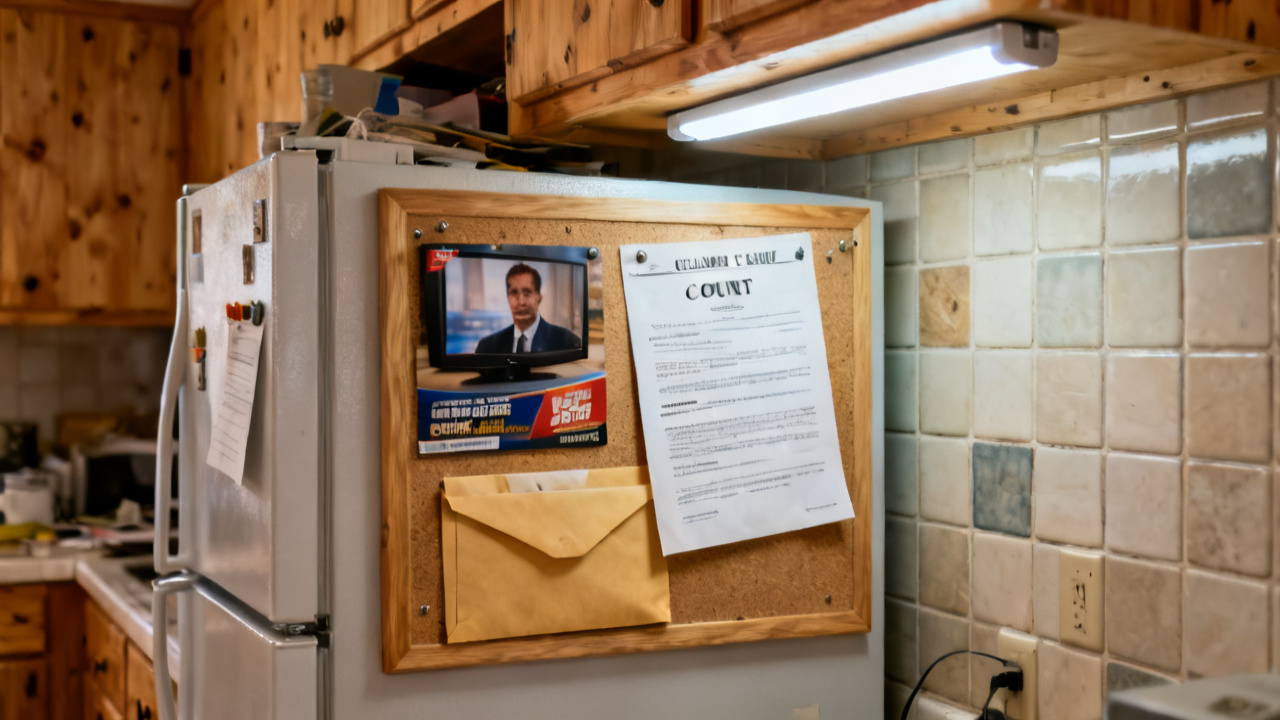
This ad vs court-stamp identification table provides clear, actionable markers for US households to separate solicitation from TV lawyer ads and official court-issued stamped notices received by mail or digital delivery. Many households receive unsolicited legal solicitation in the mail that mimics official court paperwork to pressure recipients into calling quickly, often referencing recent local accidents, class action settlements, or debt collection actions they may not recognize. Misclassifying these documents can lead to missed court deadlines, unwanted marketing calls, or accidental disclosure of personal information to unvetted third parties. Prudent Guardian created this framework to help users sort incoming legal mail without needing prior experience with court paperwork. This education is for reference only; it cannot bind coverage, a claim result, or a lawsuit, and users with specific questions about their documents should consult a licensed legal professional.
TV lawyer ad contact section markers
TV lawyer ads prioritize generating calls to the firm over providing factual case information, so their contact sections follow predictable patterns that differ sharply from official notices. The first piece of contact information listed will almost always be a toll-free 1-800 or 888 number, often printed in bold, large font across the top or bottom of the first page. There will be no contact information for a local clerk of court, state judiciary, or official court e-filing system included unless it is buried in fine print to create a false sense of legitimacy. Many ads include a prominent headshot of the lawyer featured in their TV spots, alongside props like gavels, American flags, or fake courtroom backdrops to mirror official court document branding. Contact sections will also include explicit calls to action to call immediately, with language like “don’t wait” or “you only have 10 days to claim your funds” to create artificial urgency. You will never see instructions for appearing in court, filing a formal response, or accessing the court’s public records portal in an ad’s contact section.

Court-stamped notice seal verification steps
All official court-issued notices include a verifiable seal that serves as the primary marker of legitimacy, and you can confirm its validity with four simple steps. First, locate the seal on the top half of the first page: physical copies will have an embossed, raised seal that you can feel when running your finger over the paper, while digital copies will have an embedded watermark or digital signature that remains visible when you download or print the document. Second, check that the seal includes the full, official name of the court that issued the notice, such as “Cook County Circuit Court” or “United States District Court for the Southern District of New York” — no legitimate court seal will include the name of a private law firm. Third, cross-reference the court name listed on the seal with your state’s public judiciary directory to confirm it is an active, operating court in the jurisdiction it claims to be located in. Fourth, verify that any associated website listed on the seal or notice ends in .gov, as all official US court websites use this top-level domain, while law firm sites use .com, .law, or other commercial suffixes. If a document has no seal at all, it is not an official court notice regardless of the language it uses.
Identification table sample entry breakdowns
The table below lists consistent, easy-to-compare markers to classify any legal document you receive, with no prior court experience required.
| Marker Category | TV Lawyer Ad | Official Court-Stamped Notice |
|---|---|---|
| Primary Contact Listed | Toll-free 1-800 law firm line listed first, no court contact information | Clerk of court phone number, physical address, and .gov court portal link listed first |
| Seal/Branding | Law firm logo, stock gavel/flag imagery, no official court seal | Embossed physical or digitally signed court seal with jurisdiction name, no private firm branding unless the firm is a named party to the case |
| Case Reference | Generic class action reference, no unique case number tied to your personal record, or number prefixed with law firm initials | Unique, jurisdiction-standard case number listed prominently at the top of the first page |
| Call to Action | Pressure to call the law firm immediately to claim funds, with artificial deadlines for response | Instructions to appear in court, file a written response, or submit documentation via the official court portal by a formal, court-mandated deadline |
| Fine Print Content | Explicit “attorney advertising” disclosure, fee structure language (e.g., “no fee unless we win”) | Court privacy disclosures, accessibility accommodation instructions, formal rule references for the case |
| Delivery Details | Postmarked from out-of-state bulk mail center, sent to “resident” or “occupant” if full name is not on file | Sent via first class or certified mail from the court’s county of jurisdiction, or sent via verified .gov court email/e-filing system |
Prudent Guardian recommends cross-referencing all listed markers for ambiguous documents, rather than relying on a single entry to make a classification. Illustrative example: A document with a primary contact of 1-800-CAR-WRECK, no court seal, and a call to action to call within 72 hours to claim accident compensation clearly matches all TV lawyer ad column entries. A second illustrative example: A document with a raised King County Superior Court seal, contact info for the King County Clerk of Court, and a unique 11-digit case number referencing a small claims filing against you matches all official court notice column entries.
Printed form case number formatting rules
Official court case numbers follow strict, standardized formatting rules set by state or federal judiciary systems, while TV lawyer ads use non-standard numbers tied to the firm’s internal marketing campaigns. Federal case numbers always start with a 2-digit year identifier, followed by a 2-letter case type code (e.g., “cv” for civil, “cr” for criminal, “bk” for bankruptcy), a 5 to 6 digit sequential case number, and the initials of the assigned judge, as in the illustrative example: 24-cv-01987-JTM. State court case numbers vary by state but always include a county identifier, case type code, year, and sequential number, with no references to private firm names or marketing campaign labels. TV lawyer ads will either list no case number, a generic class action number that is not tied to your personal public record, or a number prefixed with the firm’s initials (e.g., SM-2024-CAR for “Smith & Miller 2024 Car Crash Campaign”). If you cannot look up the case number listed on a document using your state’s public court records portal, it is not an official court notice. Official court case numbers are always printed prominently at the top of the first page, directly below the court name and seal, and never appear only in fine print.
Official letter delivery type requirements
Official court notices follow strict delivery requirements set by state and federal rules of civil procedure, while TV lawyer ads use low-cost bulk delivery methods to reach as many potential clients as possible. Most court notices that require a formal response are sent via first class mail with a certificate of mailing, or via certified mail with a return receipt requested to confirm delivery, and will never be sent via bulk standard mail with pre-printed promotional address labels. Digital official court notices are only sent via the court’s verified e-filing system, or a .gov email address associated with the clerk of court’s office, and will never be sent via generic Gmail, Outlook, or law firm .com email addresses unless you have already agreed to accept service from that firm as a named party to an active case. TV lawyer ads are almost always sent via bulk standard mail, often addressed to “resident” or “occupant” if the firm does not have your full legal name on file, and digital ad versions are sent via unsolicited text message or unverified email that is not linked to any court system. If you receive a legal document via hand delivery, official process servers will identify themselves as serving court papers and request a signature to confirm receipt, while ad delivery staff will leave the document at your door with no identification or signature request.
For any document you cannot clearly classify using this framework, cross-reference the listed court contact with your state’s public judiciary directory and call the clerk of court directly to confirm the notice’s legitimacy before taking any action.
Written by the Prudent Guardian editors.