Educational overview only. Prudent Guardian (inspirecodingedu.com) is not an insurance company, broker, law firm, or registered investment adviser, and does not provide personalized insurance, investment, tax, medical, or legal advice. Verify details with licensed professionals and official issuers.
Home insurance claim adjusters require structured side-by-side estimate documentation to process overlapping fallen tree removal and dwelling damage claims. Most adjusters reject bundled estimates that mix tree cutting, debris hauling, and structural repair costs because standard policies have separate coverage limits, exclusions, and deductibles for each category. Splitting line items into two dedicated columns eliminates unnecessary back-and-forth requests, cuts average claim processing time, and reduces the risk of partial claim denials for uncategorized expenses. Prudent Guardian has developed standardized tools to simplify this documentation process, though all coverage decisions are at the sole discretion of your insurance carrier, and you may consult a licensed claims professional for personalized guidance relevant to your policy. This page is for educational purposes only and does not bind coverage, claim results, or legal action.
Prudent Guardian editors
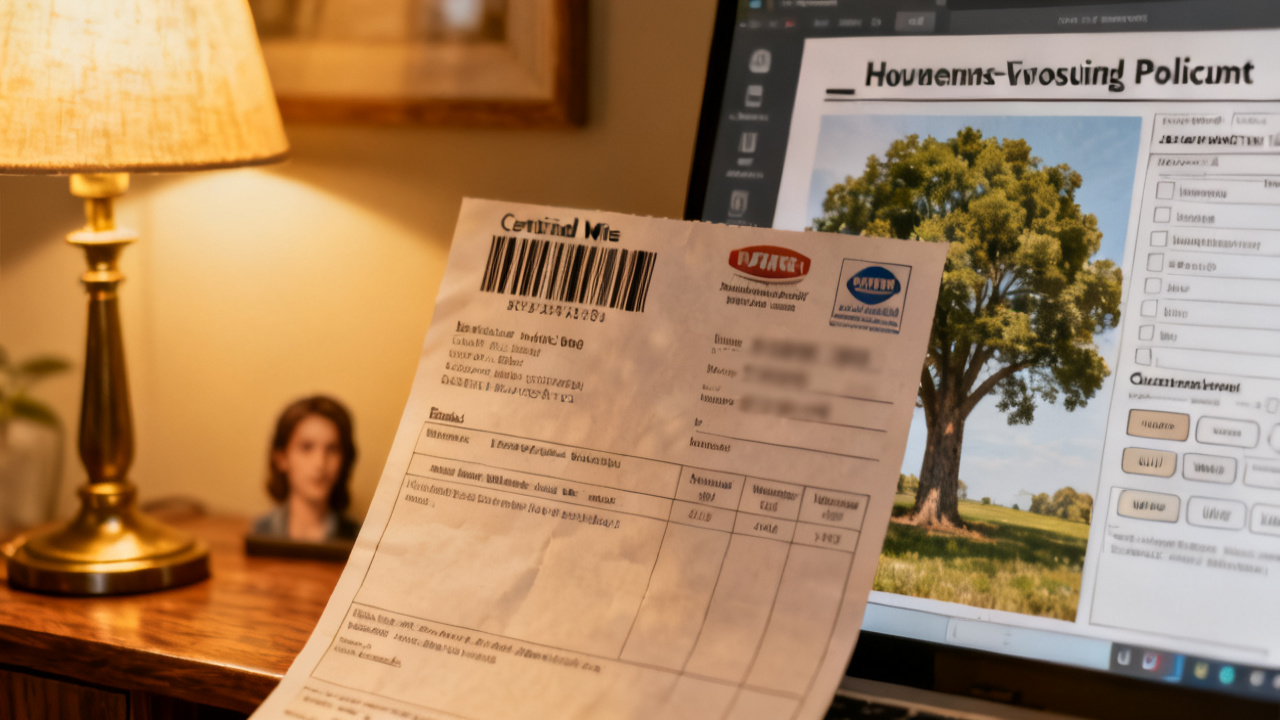
Printable estimate comparison form layout for split fallen tree and dwelling damage costs
Use the table below to separate every line item from your tree service and general contractor estimates into the two required columns, with supporting notes for your adjuster to review. Print a fresh copy for each set of competitive estimates you collect, and attach signed work orders or receipts for every line item to validate costs. If a single line item supports both services, split the cost proportionally and add a signed statement from both service providers verifying the allocation in the adjuster notes column. Total each column separately to align with your policy’s stated limits for fallen tree removal and dwelling damage, as most policies cap tree removal coverage between a fixed amount per tree and a total per claim, while dwelling damage is covered up to your dwelling coverage limit minus your deductible.
| Line Item Description | Fallen Tree Removal Cost Column | Dwelling Damage Repair Cost Column | Adjuster Verification Notes |
|---|---|---|---|
| Emergency tree cutting to remove trunk weight from roof | Illustrative example: $750 | $0 | Cost split verified by tree service work order dated 10/02/2024 |
| Crane rental for safe access to overhanging limb removal | Illustrative example: $900 | Illustrative example: $600 | 60% allocated to tree removal, 40% to roof repair access per contractor sign-off |
| Debris hauling (tree trunk, branches, and foliage) | Illustrative example: $375 | $0 | 1,200 lbs of tree debris removed, per hauling receipt |
| Stump grinding and root removal from foundation perimeter | Illustrative example: $425 | $0 | Roots measured 2 inches from foundation footing per site assessment |
| Asphalt shingle replacement and underlayment repair | $0 | Illustrative example: $1,250 | 17 damaged shingles replaced, water-damaged underlayment section 2ft x 3ft |
| Vinyl siding patching and exterior paint matching | $0 | Illustrative example: $480 | 3 cracked siding panels from limb impact |
| Seamless gutter replacement for crushed front section | $0 | Illustrative example: $620 | 12ft gutter section destroyed by falling limb |
| Foundation crack sealing from root pressure | $0 | Illustrative example: $810 | 2 hairline cracks sealed, structural assessment confirms no further damage |
| Licensed tree service crew labor (4 hours, 2 technicians) | Illustrative example: $600 | $0 | Labor exclusively for tree cutting, hauling, and stump grinding |
| Licensed general contractor labor (6 hours, 2 technicians) | $0 | Illustrative example: $940 | Labor exclusively for roof, siding, gutter, and foundation repair |
| **Column Totals** | **Illustrative example: $3,050** | **Illustrative example: $4,700** | All line items matched to attached receipts and work orders |
Labeled claim documentation folder organization for estimate submission workflows
Use this standardized checklist to build both physical and digital claim folders, aligned with most carrier submission requirements to avoid requests for reorganized materials:
[ ] Main folder labeled with your full name, policy number, and claim number (if assigned) on the front cover and spine
[ ] Tab 1: Completed two-column estimate comparison form, signed and dated by you and all service providers
[ ] Tab 2: Original, itemized estimates from licensed tree removal companies (minimum 2 competitive estimates, per most carrier requirements)
[ ] Tab 3: Original, itemized estimates from licensed general contractors or dwelling repair specialists (minimum 2 competitive estimates, if requested by your adjuster)
[ ] Tab 4: Time-stamped photos and videos of the fallen tree, impact site, and pre-existing damage (if you have records) sorted by date captured
[ ] Tab 5: All written correspondence with your carrier, adjuster, and service providers, sorted in reverse chronological order
[ ] Tab 6: Copies of your insurance declaration page and relevant policy sections referencing fallen tree removal and dwelling damage coverage
Make two identical copies of this folder: one to submit to your adjuster, one to keep for your personal records. Digital folders should follow the same tab structure, with file names formatted as [Date] [Document Type] [Claim Number] to make it easy for adjusters to locate materials quickly.
Adjuster response follow-up letter template to resolve estimate discrepancy questions
Use this fillable template to request clarification or submit additional supporting materials if your adjuster notes a discrepancy in your two-column estimate submission. You may send this via email or certified mail, and keep a read receipt or delivery confirmation for your records to prove you submitted the follow-up within required timelines.
[Your Full Name], [Your Address], [Your Phone Number], [Your Email], [Policy Number], [Claim Number]
Date: [MM/DD/YYYY]
[Adjuster Full Name], [Adjuster Title], [Insurance Carrier Name], [Carrier Address]
Subject: Follow-Up on Fallen Tree Damage Claim #[Claim Number] – Estimate Discrepancy Clarification
>
Dear [Adjuster Name],
I am writing to follow up on the estimate submission for my fallen tree damage claim referenced above, dated [Date of Estimate Submission]. Per my submission, the two-column estimate splits costs between $[Total Tree Removal Cost] for eligible tree removal and debris hauling, and $[Total Dwelling Damage Cost] for eligible structural repairs to my dwelling.
I received your correspondence dated [Date of Adjuster Response] noting a discrepancy of $[Amount of Discrepancy] for the [Line Item Name, e.g., crane rental] line item. As noted in the verification column of my submitted estimate, this cost was split proportionally between tree removal and dwelling repair access, per the attached signed work order from both my tree service and general contractor.
I have attached additional supporting documentation for this line item, including crew time logs and a detailed breakdown of how the cost was allocated. Please let me know if you require any additional information to process this portion of my claim, and I will provide it within 2 business days. You may reach me at [Phone Number] or [Email] with any questions.
>
Sincerely,
[Your Signature (for hard copy)]
[Your Typed Full Name]
Enclosures: [List of attached documents, e.g., Crew time logs, signed work order allocation statement]
Timeline tracking desk calendar markers for estimate review and submission deadlines
Use color-coded adhesive dots for physical calendars or color labels for digital calendars to mark these key deadlines, adjusted to match your specific policy requirements:
- Red dot/marker: Tree removal estimate collection deadline – 7 calendar days from the date of damage, per most carrier requirements to mitigate further loss. Illustrative example: If the tree falls on October 1, mark October 8 as the deadline to have 2 signed tree removal estimates completed.
- Orange dot/marker: Dwelling repair estimate collection deadline – 14 calendar days from the date of damage, to align with standard adjuster site visit scheduling windows.
- Yellow dot/marker: Two-column estimate completion and submission deadline – 3 business days after you receive all required estimates, to avoid processing delays that can extend claim resolution by 2+ weeks.
- Green dot/marker: Adjuster response follow-up deadline – 10 business days after you submit your estimate, if you have not received a written update on your claim status.
- Blue dot/marker: Dispute resolution deadline – 30 calendar days from the date of a partial or full denial, if you choose to submit additional supporting documentation for reconsideration.
Confirm all deadlines with your carrier directly, as some policies have shorter timelines for high-risk weather events like hurricanes or tornadoes.
Waterproof supporting document box storage for hard copy estimate and damage proof records
Store all physical claim records in a fireproof, waterproof 2-inch file box with a locking latch, stored in a secure, elevated location in your home (e.g., a closet shelf above potential flood level) to avoid loss if your home suffers additional damage. Include these materials in the box:
- Original hard copies of all estimates, receipts, and signed work orders for tree removal and dwelling repair
- Printed copies of all correspondence with your adjuster and carrier, including the follow-up letter and any formal claim decisions
- Printed copies of time-stamped photos and videos of the damage, as digital files can be lost or corrupted
- A printed copy of your two-column estimate comparison form, with any adjuster notes or updates added in pen
- A copy of your insurance policy declaration page and relevant coverage sections
Keep this box for a minimum of 3 years after your claim is fully resolved, in case of any post-settlement questions or audits from your carrier. You may back up all digital copies to a password-protected cloud storage service as an extra layer of protection, but hard copies are required for some formal dispute resolution processes.
Print the two-column estimate comparison table today and cross-reference your existing tree service and contractor estimates to assign every line item to the correct column before submitting your claim package to your adjuster.